MORGANE BESINS

Redesigning Motherhood: From Corporate Strategy to Maternal Revolution.

Motherhood is often treated as a personal experience. But for many women, it reveals something much larger; a system that was never designed with mothers in mind.

Morgane Besins spent years building global strategy at Netflix and Universal before confronting a problem no corporate framework could solve: becoming a mother in a system that had quietly forgotten the mother herself.

In this conversation with Mothered, she reflects on identity, entrepreneurship, and why rebuilding maternal care requires more than support, it requires redesign.

You describe a strong working mom as someone who doesn’t disappear in the process: someone who rests, trains, accepts help, and prioritises herself without guilt. Can you share a specific moment when you realized that this definition wasn’t just a belief, but something that you needed for yourself?

I had my second baby in January 2025. With my first daughter, I had just left my corporate job and I was fully present for her. But with my second, life looked completely different: a toddler, a newborn, and a start-up that wouldn't run itself.

So yes, I had guilt. A lot of it. My toddler was struggling with her new sister. My newborn needed me constantly. And if I didn't work, my business simply would simply fail.

I tried to hold it all. And in trying to hold it all, I slowly started to disappear.

It wasn't one dramatic moment. It was many small ones. Bathing my daughter while mentally reviewing my to-do list. Feeding my baby while drafting emails on my phone. Buying pyjamas my baby had already outgrown while answering work messages. Physically present, mentally nowhere.

At some point I had to be honest with myself: by trying to be everything for everyone except myself, I was actually fully there for no one.

That was the shift.

I understood that if I didn't protect space for myself, to train, to think clearly, to simply exist without responding to someone, I would keep disappearing in small, invisible ways. So I stopped waiting for permission. I block time every week for training and for one wellness treatment. If it's not in the calendar, it doesn't exist!

I've also learned to separate my mother brain and my CEO brain. When I'm with my children, I try to be fully there. When I work, I go deep. You can never fully separate the two identities, but you can stop letting them contaminate each other constantly.

Prioritising myself stopped being a belief. It became a requirement.

“By trying to be everything for everyone except myself, I was actually fully there for no one.”

There’s often a personal story that ignites a mission. What was the very first insight or experience that made you think: ‘This work needs to exist - and I need to build it’? What were you feeling in that first moment of clarity?

The first insight wasn't dramatic. It was quiet … and quietly infuriating.

When I had my first baby, I went to antenatal classes where we spent hours on the colour of newborn poo and how to swaddle. Nobody explained what would happen to me. The hair loss. The hormonal shifts. Matrescence. The identity change that can feel like grief even when you're happy.

I remember sitting there thinking: we are preparing women to care for a baby, but not to survive becoming a mother.

What I felt in that moment was a particular kind of frustration, not anger, but the specific discomfort of seeing something obviously broken and realising no one around you seems to think that's strange. Like a room where the roof is leaking and everyone is just moving their chairs.

Around the same time, I became fascinated by the idea of the village, the way other cultures, and our own ancestors, placed the mother at the centre of community care during this transition. Held, supported, not abandoned at the six-week check.

Why not here?

We say "happy mother, happy baby." But we've built systems that treat the mother as a side effect of the birth. Motherhood is entirely predictable at a societal level, hundreds of thousands of women go through it every year. And yet the experience still feels improvised, isolated, cobbled together.

That was the moment. Not this is hard. But this is badly designed. And once you see a structural gap that clearly, you can't unsee it.

What systems have you personally built - practically and emotionally - that allow you to thrive in both entrepreneurship and motherhood? And what do most women misunderstand about ‘doing it all’?

What most women misunderstand about doing it all is that nobody actually is. They're either supported or silently managing a level of load that isn't sustainable and isn't visible.

The first thing I had to accept is that balance isn't a daily state. It's seasonal. There are periods where my children need more of me, and periods where the business does. Trying to equalise every single day is a losing game. I stopped measuring in days and started thinking in quarters, which, as it happens, also makes me a better CEO.

Practically, I don't operate alone and I stopped pretending I could.

At home, I delegate without apologising. That means paid help where we can afford it, and an honest conversation with my partner about who carries what.

The mental load is real, and it only becomes invisible when no one names it. We name it.

The biggest mindset shift was this: I stopped aiming to do it all and started aiming to design my life well. Those are not the same goal. One is about volume. The other is about architecture.

“We are preparing women to care for a baby, but not to survive becoming a mother.”

If you could redesign one core system tomorrow - whether corporate leave, postpartum care, or leadership pathways - what would you rebuild first, and how would it fundamentally change a mother’s experience?

Postpartum care, without hesitation.

The moment a baby is born, all attention shifts to the child. Which is understandable but also incomplete. Because the person who just went through a profound physical, hormonal, and psychological transformation is standing right there, often in shock, and the system has already moved on.

Postpartum recovery is still largely treated as a six-week medical checkpoint. Cleared for sex, back to work, carry on. But the reality is that recovery (physical, emotional, hormonal) can take months, sometimes years. And that's not a personal failing. It's biology that we've chosen to ignore because it's inconvenient.

f we genuinely redesigned postpartum care to support mothers, not as an optional extra but as a clinical and social priority, the downstream effects would be enormous.

Women's mental health outcomes, their confidence, their ability to re-enter their careers and relationships from a place of strength rather than depletion. All of it changes. But it cannot exist in isolation.

If workplaces don't change at the same time, women return from maternity leave rebuilt on the inside and walking back into a structure that was never designed for them. Policies on paper mean nothing if the culture hasn't shifted. And culture doesn't shift until leadership genuinely understands that supporting a mother through this transition isn't a kindness, it's what retains your best people and empowers your strongest leaders.

Supporting mothers isn't a wellbeing initiative. It's a leadership strategy.

If you could go back and give your pre-motherhood self one piece of advice - about strength, identity, ambition or balance - what would it be? And how does that advice influence the person you are today?

Before I became a mother, I was a people pleaser. I said yes to almost everything, meetings, requests, social obligations, often at the direct expense of my own time, energy, and wellbeing. I carried a quiet but constant anxiety about disappointing people. I avoided conflict. I outsourced my boundaries to other people's comfort.

Motherhood ended that, not gently.

It clarified my priorities in a way nothing else had. It made me efficient by necessity and honest by force. It deepened my emotional intelligence and, eventually, it gave me back my own instincts.

I stopped apologizing for protecting what matters. I stopped performing busyness as proof of worth.

If I could go back, I would tell her this: don't brace yourself for loss. Prepare for transformation.

Motherhood didn't take anything from me that I needed to keep. It stripped away what was noise, the people-pleasing, the anxiety, the constant monitoring of whether I was enough. And what was left was sharper, calmer, and far more certain of itself.

Your identity will not shrink. It will become more itself.

What do you hope your children absorb from watching you build FOUR MAMAS? What lesson about womanhood, motherhood, or ambition matters most to you?

I have two daughters. In many ways, what I'm building is also a letter to them.

I want them to grow up in a world where the choice between ambition and care doesn't exist, because women fought to dismantle it. I want them to see, in their own home, a mother who builds things and rests. Who asks for help without shame. Who creates impact without erasing herself in the process.

I want them to understand that strength is not the same as endurance. That you don't prove your worth by how much you can carry. That leadership and care are not opposites: they are, in the best people, the same thing.

But the lesson I most want them to carry is simpler than any of that: take care of yourself first. Not as a luxury. Not when everything else is done. First. Because no one will ever do it for you, and everything else depends on it.

Strength does not come from exhaustion. I want them to know that before they ever have to unlearn it.

Supporting mothers isn’t a wellbeing initiative. It’s a leadership strategy.

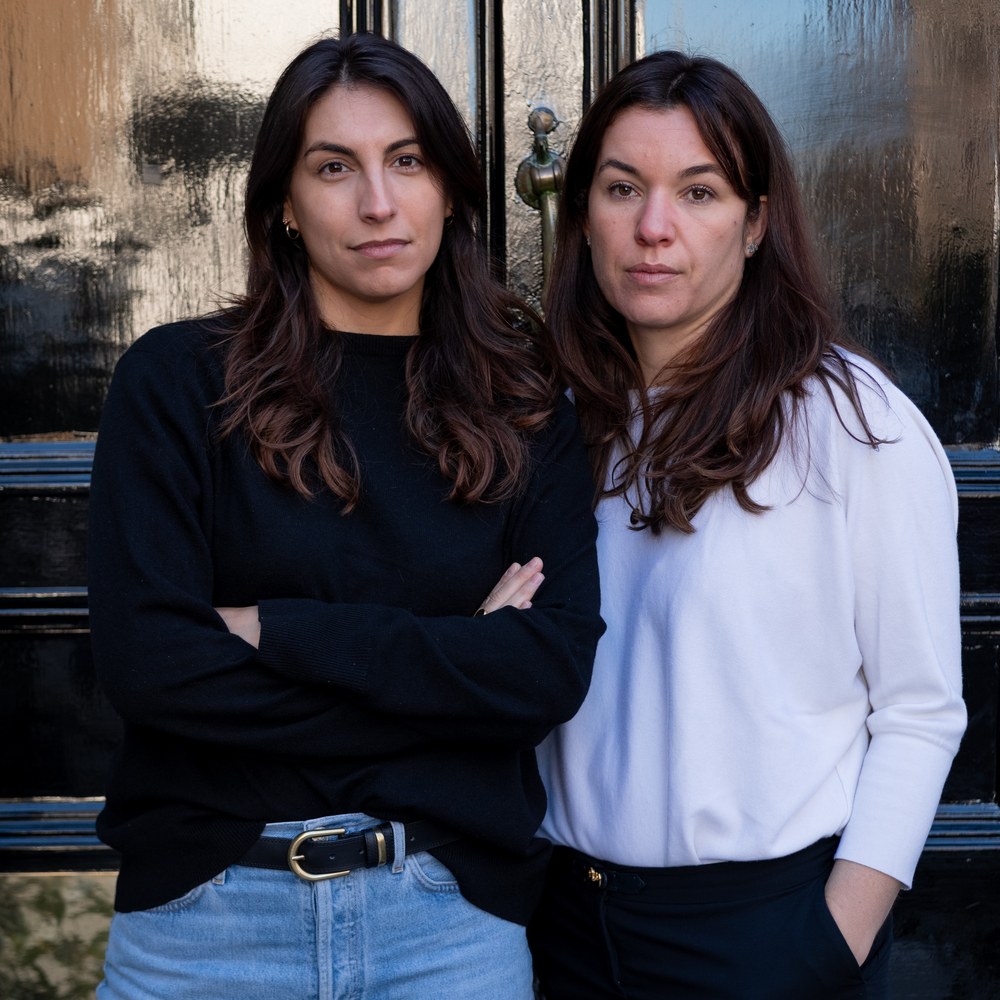
Morgane Besins is the co-founder of FOUR MAMAS, a maternal health start-up redefining how women are supported from fertility through postpartum and beyond.

After building global strategy as an executive at Netflix and Universal, she turned her focus to a system that had quietly failed mothers. That experience led her to co-found FOUR MAMAS, combining clinical insight with strategic design to create a new model of maternal care.

Website: www.four-mamas.com

Instagram: @f_ourmamas

Previous
Previous

IRENE COFONE

Next
Next

CRYSTINA HUGHES