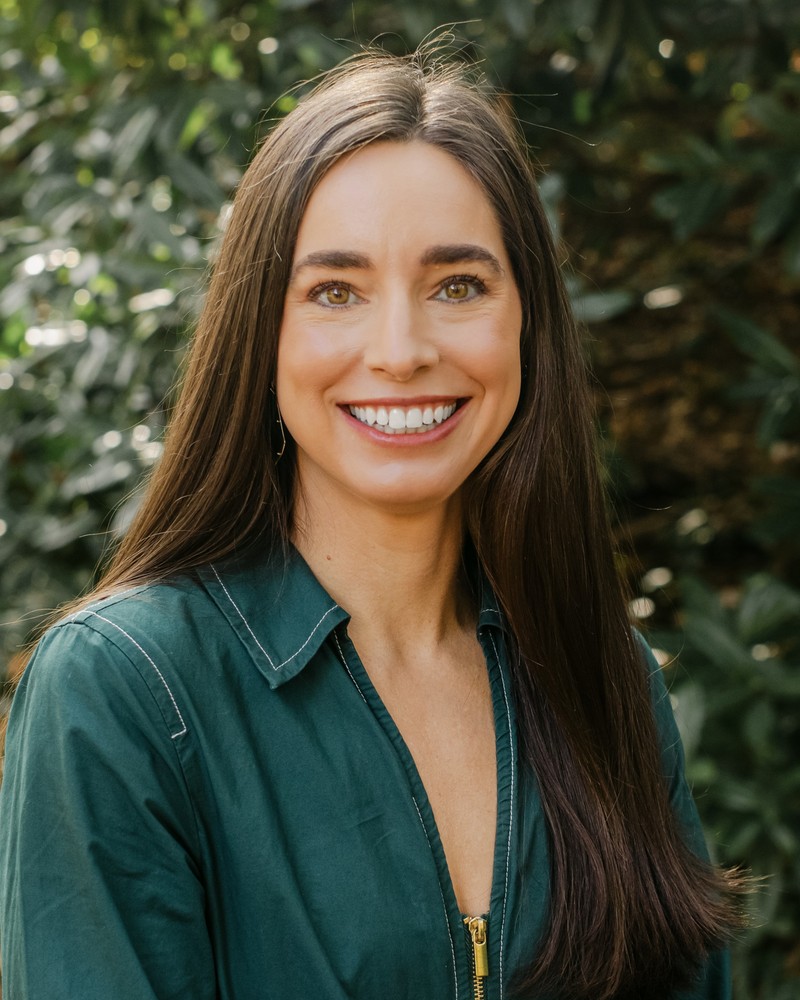
MARIAH STOCKMAN
Motherhood Shift: Built with Both Hands
She thought she needed business support. What she actually needed was a community of women carrying both motherhood and ambition at the same time.
In this conversation with Mothered Magazine, she reflects on building something for mothers while navigating early motherhood.
Listen to her video podcast interview here.
You’ve said that when you became a mother, you realized very quickly: “Oh… it’s like this now.” Can you take us back to that season of your life? What felt hardest or most disorienting about trying to hold both motherhood and ambition at the same time?
When I became a mother, I realized very quickly, “Oh… it’s like this now.” Not because ambition disappeared, but because everything suddenly carried a different weight.
I remember being just three weeks postpartum and being threatened with legal action by a former client who had essentially weaponized my maternity leave. I was navigating one of the most vulnerable seasons of my life, physically recovering, learning how to care for a newborn, and trying to find my footing as a new mother, while also feeling the pressure and responsibility of running a business.
I looked around and realized I had stay-at-home mom friends, and I had entrepreneurial business friends, but I was deeply lacking relationships with women who understood both worlds at the same time. I felt incredibly alone and isolated.
Running a business in one hand while holding a baby in the other is a very specific experience. There are layers to it that only another mother building something can truly understand. The mental load, the guilt, the ambition, the love, the constant tension between wanting to be fully present while still wanting to pursue the vision you have worked so hard for.
That season was disorienting because I felt like I was trying to hold two identities that the world often presents as separate, motherhood and ambition. But it was also the season that showed me what was missing. I did not just need business support. I needed community. I needed women who could look at me and say, “I get it. I’m carrying both too.” And honestly, that realization became the pivotal moment and foundation for everything I have built since.
One of the most powerful things you’ve shared is that Made for Mothers was born out of feeling deeply alone. What do you think so many ambitious mothers are craving right now that they’re not finding in traditional networking spaces or workplace culture?
I think ambitious mothers are craving spaces where they do not have to split themselves in half. Right now, so many women feel like they are being handed two separate identities. You can be the deeply present mother, or you can be the ambitious business owner, the leader, the visionary. But very few spaces truly hold both.
Traditional networking spaces have never really been designed with mothers in mind. I remember having this thought early on: Why is so much networking happening at happy hour? Because for most moms, happy hour is anything but happy hour. It is dinner on the stove, bath time, bedtime routines, missing pajamas, and trying to answer one last email while someone is asking for a snack they absolutely need right now.
Motherhood changes the architecture of your life. Even something as simple as seeing friends becomes a series of calculations and coordination. You're thinking through childcare, nap schedules, work commitments, school pickup, and everyone's availability. There is so much invisible labor happening behind the scenes that people do not always see.
I think women deeply crave the container of community, but many do not know how to access it or build it. And many believe community will require more from them when they already feel stretched thin. But what I have found, both personally and through the women I work with, is that the right community does the opposite. It does not become another demand on your capacity. It expands it.
Because when you are surrounded by people who understand your season of life, you stop carrying quite so much alone. And I think that is what ambitious mothers are really searching for right now. Not another room where they have to perform, but a place where they can fully belong.
You’ve talked about essentially “burning your multi-six-figure agency to the ground” after becoming a mother because the hustle culture version of success no longer fit your life. That’s a huge identity shift. What did motherhood make you question about the way we define ambition, productivity, and success for women and how did you experience that?
Becoming a mother made me question whether I had built a business around the life I actually wanted, or whether I had built my life around the business I had created. Before motherhood, I had a successful multi-six-figure agency and on paper it looked like success. I was good at what I did, I knew how to build, I knew how to achieve. But becoming a mother made me realize those are not necessarily the same thing as purpose.
I did not want to continue building something simply because I had become skilled at it or because it made money. All of a sudden, legacy felt real because I was holding it in my arms. Success stopped feeling like the next revenue milestone or more growth for the sake of growth. I started asking bigger questions. What am I building? Who am I building it for? And what do I want my children to witness me creating?
I wanted to work with mothers because I wanted to create a life where my babies could be on Zoom and so could theirs. I wanted to build something bigger than a business. I wanted to build a brand, a movement, a community. I wanted to lead from purpose and create a business model that fit inside my life and family, instead of asking my family to fit around my business.
Motherhood did not make me less ambitious. It completely redefined ambition for me. I think for so long we have measured ambition by output, by hustle, by how much we can hold and how much we can prove. But I started seeing ambition differently. Ambition became building a life I genuinely wanted to live. Ambition became creating with intention. Ambition became designing success in a way that felt expansive instead of exhausting.
And now I get to live that every day. My 8 month old baby is basically on every zoom call. I take calls during nap time. I shut my laptop every day for school pickup. I am deeply immersed in community and I get to dream and build and create something that brings me so much joy through Made for Mothers. That version of success feels so much richer to me because I did not just build a business. I built a life around what matters most.
A lot of women talk about the logistical juggle of motherhood and entrepreneurship. But there’s also the emotional load: the guilt, the isolation, the constant feeling of being pulled in two directions. What conversations do you think mothers still aren’t having honestly enough about what this season actually feels like?
I think one of the conversations we still are not having honestly enough is around what this season actually asks of a woman emotionally. We talk a lot about the logistical juggle of motherhood and entrepreneurship, but much less about what it feels like internally to carry all of it.
Motherhood introduces this constant tension where you can feel deeply grateful and deeply overwhelmed at the same time. You can love your children fiercely and still miss parts of who you were before. You can be building something meaningful and still feel lonely in it. I think so many women are carrying these conflicting emotions and quietly wondering if they are the only ones feeling them.
I also think we are not talking enough about the nervous system piece of it all. Becoming a mother is not just a schedule change. It is an entire rewiring. Your body, your identity, your priorities, and your emotional capacity are all shifting at once. Yet so many women are expected to move through this season as if nothing fundamental has changed. There can be pressure to jump right back into productivity and performance while internally you are still learning how to hold this entirely new version of yourself.
And I think that is why I want us to shift the conversation away from constantly asking women how they are going to scale and start asking how they are developing as leaders. We spend so much time talking about growth strategies and productivity, but motherhood has taught me that success is not only about what you can build. It is about what you can hold.
Because eventually the challenge is not whether you can create more. It becomes whether you have the internal capacity to carry more without losing yourself in the process. I think mothers need more space to talk honestly about that part. Not just the logistics of holding it all together, but what it actually feels like to become the woman capable of holding it.
Made for Mothers feels bigger than a networking group or business membership; it feels like a response to a cultural problem. At what point did you realize you weren’t just building a business, but creating a movement and a new kind of support system for mothers?
I do not think I had some big lightning bolt moment where I thought, I am building a movement now. I actually think it happened much more quietly than that. It started with solving a problem I was personally living. I felt isolated. I felt like I was standing in the middle of two worlds that were not fully meeting me. I had motherhood spaces and I had business spaces, but I could not find a place where women were allowed to bring both.
Then I started creating spaces for mothers and listening. Really listening. And I realized very quickly that women were not only coming for networking or business strategy. They were coming because they were craving connection. They were craving relief. They were craving spaces where they did not have to edit themselves or explain themselves.
I started hearing the same things over and over again. I thought I was the only one feeling this way. I have been looking for this. I did not realize how much I needed this. And that was the moment I realized I was looking at something much bigger than a business model. Because businesses solve problems, but movements often begin when people realize they are not alone.
I think we are experiencing a cultural problem around motherhood right now. Mothers are more connected digitally than ever, yet many feel deeply disconnected in their real lives. We have lost some of the village and at the same time we are asking women to carry more than ever before. Build the business. Be present. Chase the dream. Raise the children. Do it beautifully. Do it gratefully. And somehow do it all without needing support.
Made for Mothers became my response to that. Not because I set out to build a movement, but because I wanted to build the thing I needed. And somewhere along the way, I realized I was not building something for mothers. I was building it with them. That is when it started feeling bigger than me.
You often talk about wanting mothers to feel deeply seen, rooted for, and supported. As you raise your kids while building this movement, what do you hope they learn from watching the way you move through work, motherhood, community, and ambition?
I hope they learn that work is joyful. I want them to see that building something meaningful does not have to come from pressure, exhaustion, or constantly chasing the next thing. You can be deeply ambitious without living in pursuit mode all the time. You can build from joy, curiosity, and purpose instead of proving and performing. I want them to understand that joy is not something you earn after success. It can be the thing that guides you toward it.
I hope they learn that life is something you design. So many of us are handed ideas about what success, work, and achievement are supposed to look like. But I want them to know they have permission to evolve, to pivot, to change their minds, and to create a life that feels aligned rather than simply checking boxes.
I also hope they grow up believing that nothing is impossible. Not because everything is easy, but because many things that feel out of reach are built by ordinary people who decided to start and kept showing up. Often the people who build meaningful things are not more special than anyone else—they were simply willing to take the first step before they felt fully ready.
More than anything, I hope they understand that people matter. Relationships are the real currency of life. If they learn to follow joy, build courageously, stay curious, and care deeply about people along the way, I think I will have done something right.
When you think about the future of working motherhood 10 or 20 years from now, what do you hope is fundamentally different because women started building communities, businesses, and support systems like this instead of continuing to do it all alone?
I hope that 10 or 20 years from now the conversation around working motherhood becomes much more expansive and much less fear-based. Right now, so much of the conversation begins in overwhelm. First it is fear around pregnancy and birth itself. Then almost immediately it becomes, How am I going to cover maternity leave? How long can I step away? Then before you know it, the conversation shifts again to, How could I possibly bring another baby into this? Will my business sustain it? Can I really keep all of this going?
These questions are real and important, but I think they also reveal how many women still feel like they are carrying the weight of figuring it all out alone. I hope we stop celebrating women for how much they can carry and start celebrating them for how intentionally they build support around them. I do not think doing it all alone was ever the goal.
My hope is that because women are building communities and support systems around one another, mothers are finding spaces where they can openly talk about these things and realize they are not the only ones asking these questions. Community changes what people believe is possible.
And I also hope we hear more women saying something we do not hear enough. Motherhood is RAD. Family life is RAD. Becoming a parent is wildly transformative and beautiful and expansive. Motherhood did not make me less ambitious. It changed my ambition. It made me more purposeful, more intentional, and more connected to what actually mattered. I think with every child you bring into the world, your capacity grows too. Your heart expands, your leadership expands, and your perspective expands.
I would love to see us stop asking whether a business can survive motherhood and start asking what motherhood can unlock inside a woman. Because businesses find their path, but the woman building it grows too.
Mariah Stockman is a boy toddler mama, mult-xix-figure marketing agency builder, serial business launcher, former TEDx event producer, business coach for moms, and Made for Mothers founder who is deeply committed to changing the conversation for working moms!
Instagram: @madeformothers.co
Website: https://www.madeformothersco.com/