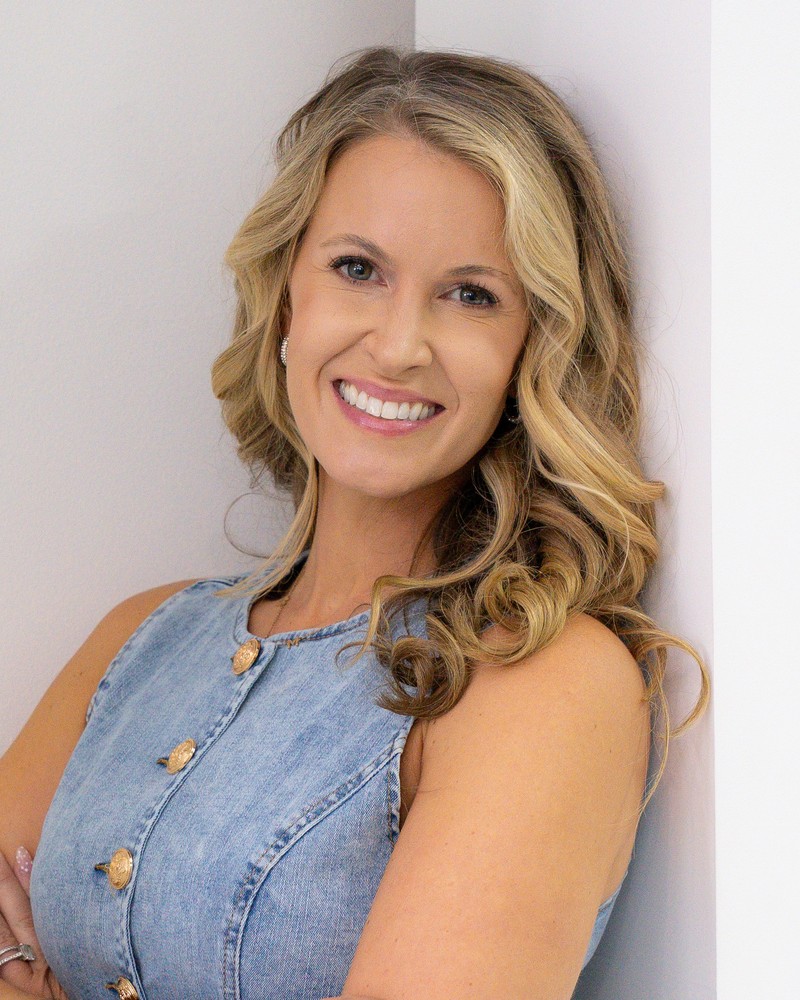
KATHRYN HATCHER
THE VILLAGE WASN’T COMING
The village was supposed to be there. Instead, Kathryn Hatcher found herself managing camp schedules, childcare logistics, and endless spreadsheets alone. What began as a personal frustration became a mission to build something parents genuinely needed.
Listen to her video interview here on the Between Meetings & Motherhood podcast.
A lot of parents experience the chaos and mental load of coordinating camps, schedules, and childcare but most people just accept it as part of parenting. What made you decide you weren’t willing to accept it, and instead wanted to build something to change it?
It was 1am in early January. My kids were asleep, my husband was asleep, and I was alone at my desk with a color-coded spreadsheet. Again. I'm a project manager by background, so of course I had a system, color-coded by date, by cost, by which camps my son liked last year versus which ones I thought he might like this year. And it was still too overwhelming to update it every year and coordinate all the logistics. And I just sat there thinking, why doesn't this exist? Why can't I search every camp in one place? Why am I doing this alone, in the dark, for the third year in a row?
I already knew most moms were doing this too, but I kept asking around. They too were alone, at night, quietly working on their summer camp plans. And nobody had decided to fix it.
We talk a lot about the village, the one we were told would show up when we had kids. But a lot of us don't have it. And I thought, if I can't find that village, maybe I can start building it. I can help with this part (camp planning) and build the village too.
There’s a different kind of pressure that comes with building something while raising young children at the same time. What has surprised you most about yourself during this season of simultaneously growing a company and growing your family?
A lot, but I’ll pick two.
I've always known I was ambitious, but I don't think I ever truly understood what that meant until now while also balancing it as a parent. I was always ambitious. Sports, grades, and in my twenties, climbing the corporate ladder, going for the next promotion, working the extra hours. But ambition when you're also a mom to a seven-year-old and a four-year-old? That's a different animal. I believe in Camply so deeply, and I want it to grow so fast, but I also know that I cannot stay up until 3am every night or I will not be my best the next day. For my kids, or for my business.
So the surprise has been learning to hold both of those things at once - the urgency of building something that matters and the reality that I have small humans who need me to actually show up. It’s possible to do both, but it’s often in conflict so I have to be clear on my values, make the choice, and accept it.
The other thing that surprised me is how much mindset matters. I talk about this with my therapist and even my kids. The belief that if you keep showing up, keep learning, keep giving - the opportunities really are endless. I'm still working on it. But I believe it.
You’ve spoken openly about the transition from earning a stable income to suddenly starting over and building Camply from the ground up. What did that season teach you about resilience, risk, and your own capacity as a woman and mother?
I was making $185k base salary, not including bonus, when I was laid off. And now I don't pay myself.
I share it because I think it's important to be honest about it. I am deeply grateful for my husband, who works and supports our family and I also know that not everyone has that. It is a privilege I don't take lightly.
But here's the complicated part: money has always meant independence to me. My parents were divorced, and from a young age I understood that having your own income meant having your own freedom. So walking away from a salary wasn't just a financial decision. It was tied to something much deeper in me.
Building Camply meant turning a deeply personal frustration into a real business and solution for other families. At what point did you realize this had become bigger than solving your own problem and that you were building something parents genuinely needed?
Pretty early. I had already spent two years living this problem myself, and I kept hearing parents around me say the same things. But I wanted to validate it before I built anything.
So I created an Instagram account and decided to spend January and February as a camp concierge - helping families one-on-one, building them customized camp plans. And I realized almost immediately that I could only help so many families that way. The income wasn't going to scale. But more than that, I saw how much support parents actually needed, and how one person couldn't come close to meeting it.
I talked to every mom I could. I sent surveys to daycare parents. I collected 50 spreadsheets from parents across the country to see how they were planning camps. I posted about it on social media. And the same story kept coming back: this is exhausting, we're all doing it alone, and nobody has built anything to help us. That's when it stopped feeling like my problem and started feeling like something I had a responsibility to fix. And we’re doing it!
A big part of Camply isn’t just convenience, it’s community. Why was it important to you to build something that helps parents feel less alone in the mental load of raising kids?
Because I learned the hard way what it feels like to not have the village.
I thought I would automatically have one when I had kids. That's what everyone tells you: “you'll find your people”. But then COVID hit when my oldest was one. We had just moved to Atlanta a few months before. I barely knew anyone. And I was a new mom in a new city during a pandemic, and the village just wasn't there.
So when I think about what Camply can do - connecting families whose kids are going to the same camps, helping parents plan together so your child has a buddy on the first day - that's not just a feature to me. That's the thing I actually needed and didn't have.
We need each other. Not just to share spreadsheets. But to share the load, to actually lean on each other. Camply is partly logistics infrastructure and partly a reminder to parents everywhere that someone thought you deserved a little more support than you've been getting.
You’re building this company while raising two young children. When your kids look back on this season of your life one day, what do you hope they understand about why you chose to build something of your own and the legacy and impact you’re creating?
I have entrepreneurs in my family, so I've seen both sides of it. The highs and the lows.
But what I hope my boys understand is that I chose this for them too. I chose this so I could leave at 10am on a Tuesday for a school event and come back and keep building. I chose this so they would watch their mom bet on herself even when it was scary.
We do this thing at dinner called sweet, sour, monkey: something good, something not so good, something silly. You always have to share a sweet. When I can, I try to make mine something new I did that scared me, and how it felt to do it anyway. I want them to see that so they believe they can do it too.
I'm raising boys. And I want them to grow up knowing that a woman has a choice. She can be ambitious. She can build a career. She can also choose not to - and that's equally valid. The point is that it's her choice. I want them to have seen their mom make hers.
Kathryn Hatcher is the founder and CEO of Camply, a platform that helps parents discover, organize, and coordinate school break and summer camps in one place.
After launching Camply in 2025, she began building the company as a solo, bootstrapped founder while raising two young boys and navigating the same planning challenges faced by the families she serves. Today, she is working to make camp planning simpler, more connected, and more supportive for parents everywhere.
Website: joincamply.com
LinkedIn: Kathryn Hatcher
Instagram: @joincamply
Substack: Parent Tech Built in the Margins