
IG SP YT LI
Money

The Real Cost of “Just Staying Home for a While”

The phrase undersells what's actually being given up, and what it takes, later, to get any of it back.

Mothered Essays · 5 min read

The Real Cost of “Just Staying Home for a While”

"Just staying home for a while" is one of the most quietly misleading phrases in modern family planning. It frames an enormous financial and career decision as a small, reversible pause, a comma in a sentence, rather than what it often actually is: a fork in the road with consequences that don't fully reveal themselves for a decade or more. The financial cost of staying home is real, significant, and almost never fully modeled before the decision is made. It deserves to be treated with the same rigor as any other major financial choice, because, by any honest accounting, it usually is one.

The Part Families Actually Model

The visible cost is the lost salary during the time away, and most families do the math on that part. If she earns $90,000 and plans to take eighteen months out, that's $135,000 in direct income. Families subtract that figure, run the budget, and decide whether it's manageable. Sometimes it is. The decision gets made on those numbers.

What rarely gets modeled is the slower, larger cost that follows, the one that builds invisibly over the years after the return and doesn't announce itself as related to the original decision until it's already substantial. The promotion cycle missed while she was out. The skills that need rebuilding on re-entry, because the field moved in eighteen months and she needs investment, her own or her employer's, to catch up. The salary negotiation that starts from a lower base because the gap is now on her resume and functions as a downward anchor. The retirement contributions that never got made and never get fully recovered, because compounding interest doesn't offer retroactive crediting for the years she wasn't able to contribute.

"For a while" frequently turns into a permanent downward shift in lifetime earning trajectory, not because the woman became less capable, but because re-entry was never designed to be financially neutral. The institutional memory around her level, her trajectory, and her "commitment" reset in ways that rarely reset upward without deliberate intervention. The pause is recorded. The progress from before it is often not.

Why the Smaller Number Gets Used

The reason "just staying home for a while" persists as framing is that it is easier to make the decision that way. The real number, the full present-value cost of the leave period when modeled against lifetime earnings, retirement savings, and Social Security credits, is significantly larger and more uncomfortable to sit with. It also requires acknowledging that the decision is being made unequally: in most households, it is her career that adjusts, her earnings that are forgone, her compounding that is interrupted. Modeling the full cost of that choice makes explicit what the softer language allows to remain implicit.
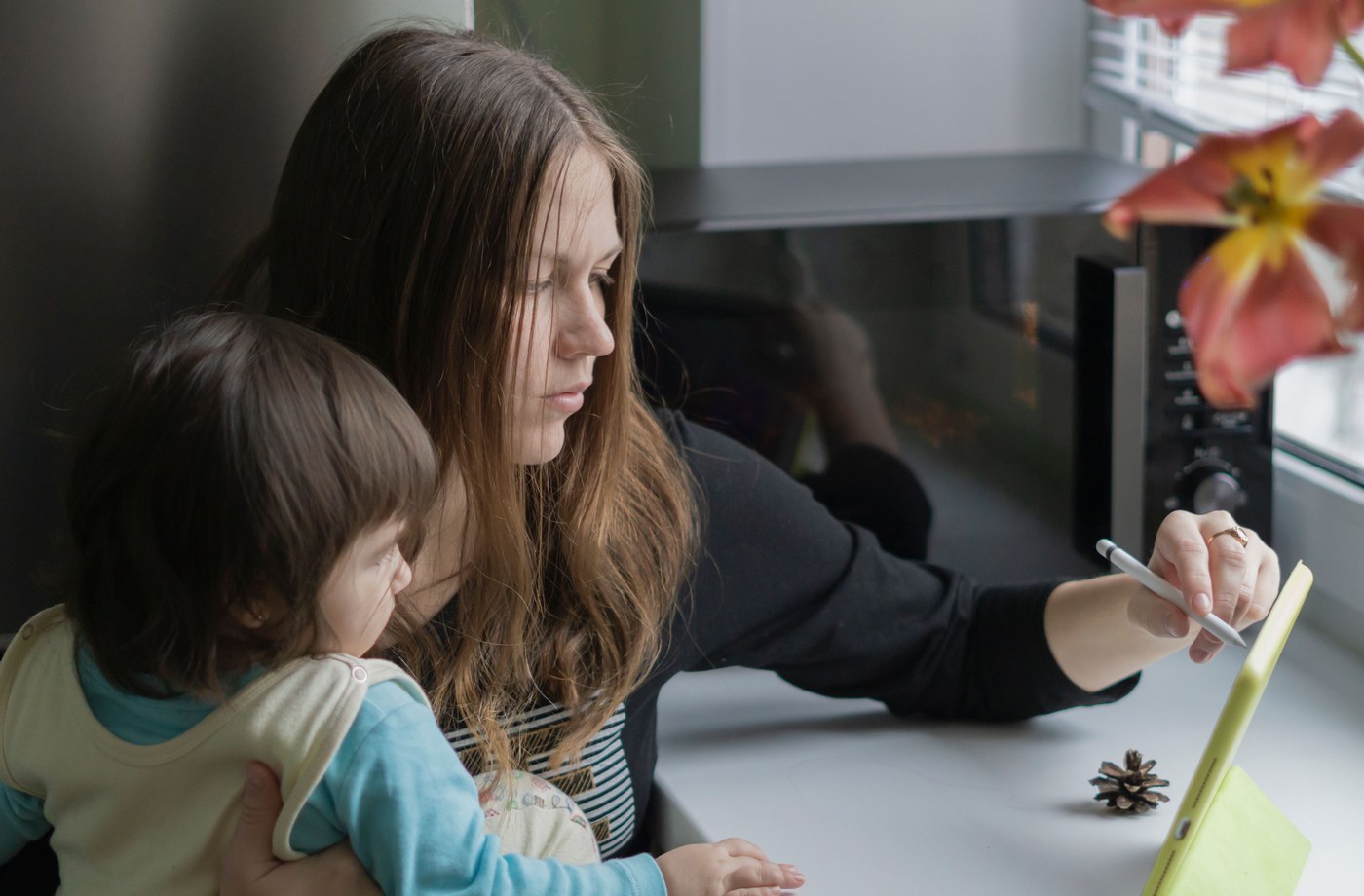
“For a while” frequently turns into a permanent downward shift in lifetime earning trajectory, not because she became less capable, but because re-entry was never designed to be financially neutral.

— Mothered, on record

This is not a reason not to make the decision. For many families, it is the right decision by every measure that actually matters to them, for the children, for the household, for the specific season of life they're in. The argument is not against staying home. The argument is against making that decision with an incomplete financial picture, treating it as a pause when the data suggests it behaves more like a fork, one that deserves the same rigorous modeling as any other six-figure financial choice.

What Eyes-Open Planning Looks Like

None of this is an argument against staying home. The argument is against making that decision with an incomplete financial picture, treating it as a pause when the data consistently shows it behaves more like a permanent inflection point.

Going in with eyes open changes the conversation significantly. It means, if possible, negotiating the terms of re-entry before leaving rather than after, securing the level, the title, the project that will be waiting, in writing if the organization will allow it. It means treating the lost retirement contributions as a real number with a real plan: what is the path to offset them over the next five years, and who is responsible for executing it? It means the partnership conversation that most couples avoid: if her career takes the financial hit, what is the plan, concrete and revisited annually, to account for that in how the household's financial resources are organized going forward?

The Decision the Language Has Been Hiding

Going in with eyes open changes the conversation. It means negotiating re-entry terms before leaving, if possible. It means treating the lost retirement contributions as a real number to plan around, not an afterthought. It means giving the decision the financial seriousness it has always actually had, even when the language around it has stayed deliberately small.

"Just staying home for a while" is often the right thing to do. It is almost never a small thing to do. The gap between those two realities, right and small, is where the financial consequences quietly build, unacknowledged, until they become significant enough to constrain future choices the woman hadn't yet anticipated needing. Naming the decision at its actual scale doesn't make it wrong. It makes it possible to make it well, with real planning, real partnership, and the real financial respect that any major life decision deserves.