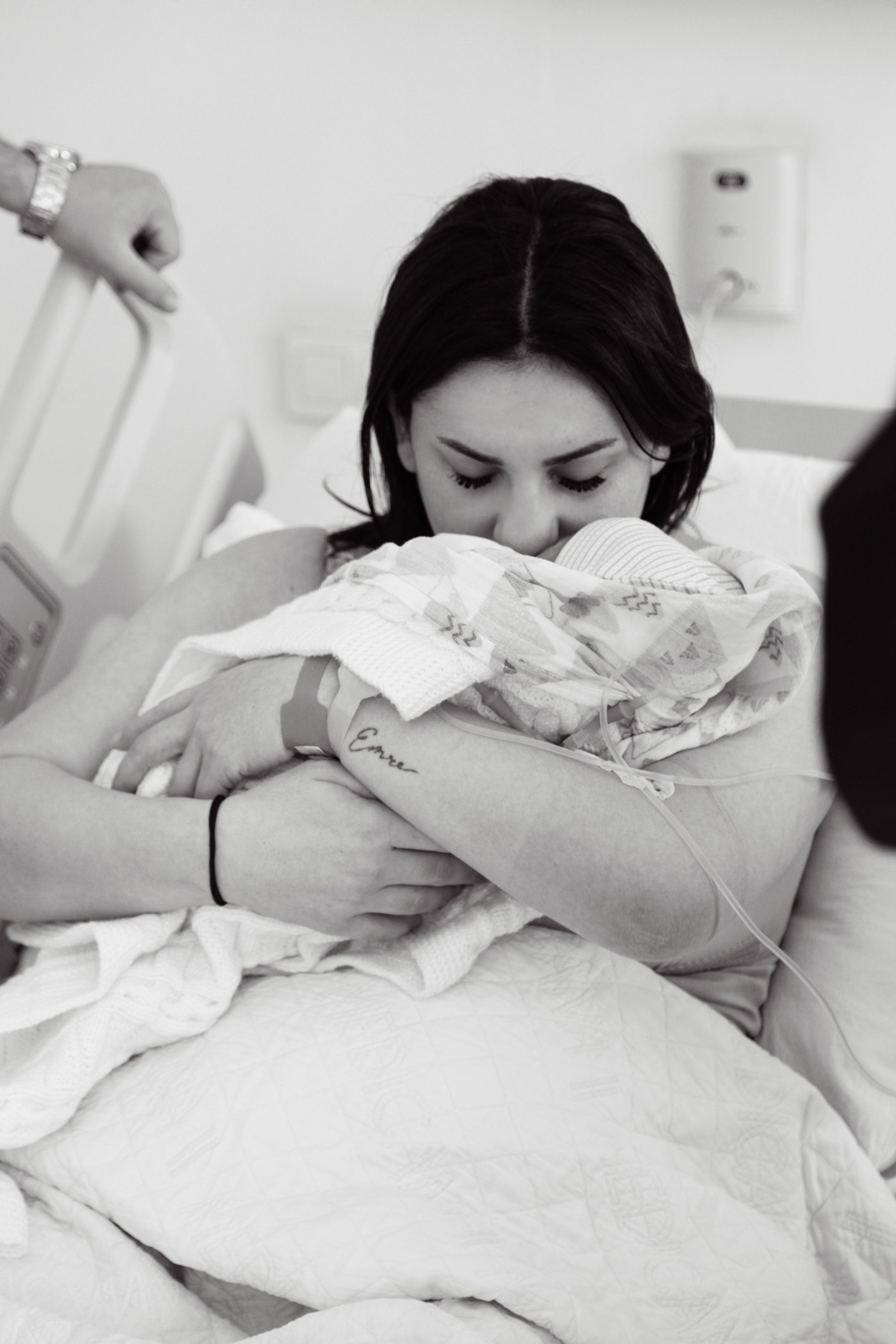
Adolescence has a name, a body of research, and a cultural vocabulary built up over a century to explain why a teenager's brain and identity are in genuine upheaval. Matrescence, the psychological, neurological, and physiological transition into motherhood, has existed just as long and just as universally, and yet almost no one hears the word until they are, often abruptly, living through it. The matrescence definition is simple: it is what happens to a woman when she becomes a mother. The silence around it is not simple at all.
What the Word Actually Describes
The term was coined in the 1970s by anthropologist Dana Raphael, who noticed that the cultural and biological transition into motherhood was as profound as the transition into adolescence, and far less studied. Decades of research since have filled in the picture. During pregnancy and in the months following birth, a woman's brain undergoes measurable structural change, gray matter volumes shift in ways that researchers believe support bonding, threat detection, and the reading of an infant's needs. Hormonal systems reorganize dramatically. The neurological architecture of identity and self-perception is actively rewritten.
This is not metaphor. This is neuroscience. A woman becoming a mother is undergoing a developmental transition comparable in its scope, if not its social visibility, to adolescence. Adolescence comes with warning labels, with cultural scaffolding, with adults who have been trained to expect difficulty and instability and identity flux as normal and survivable. Matrescence comes with a baby shower and a "congratulations," and then, almost immediately, with the expectation of functional performance in two demanding roles simultaneously.
The Transition Is Not a Metaphor
The transition is not a metaphor. Hormones shift dramatically. Identity reorganizes around a role that didn't exist the week before. Relationships, priorities, even a woman's sense of her own body, undergo a rewiring that researchers describe in terms not far off from adolescence itself, and yet society offers a six-week postpartum checkup and a question about contraception where it might have offered preparation, language, and genuine support.
What this means practically is that the disorientation many women experience in the transition to motherhood is not a sign that something has gone wrong with them. It is a sign that something very large is happening to them, a reorganization of identity and neurology at a scale that is legitimately difficult. The grief that can sit alongside joy without contradiction. The sense of being unrecognizable to oneself. The cognitive fog. The identity ambivalence, wanting fiercely to be a mother and also wanting to be the person who existed before, these are not failures or complications. They are the documented markers of a developmental transition doing exactly what it is supposed to do.