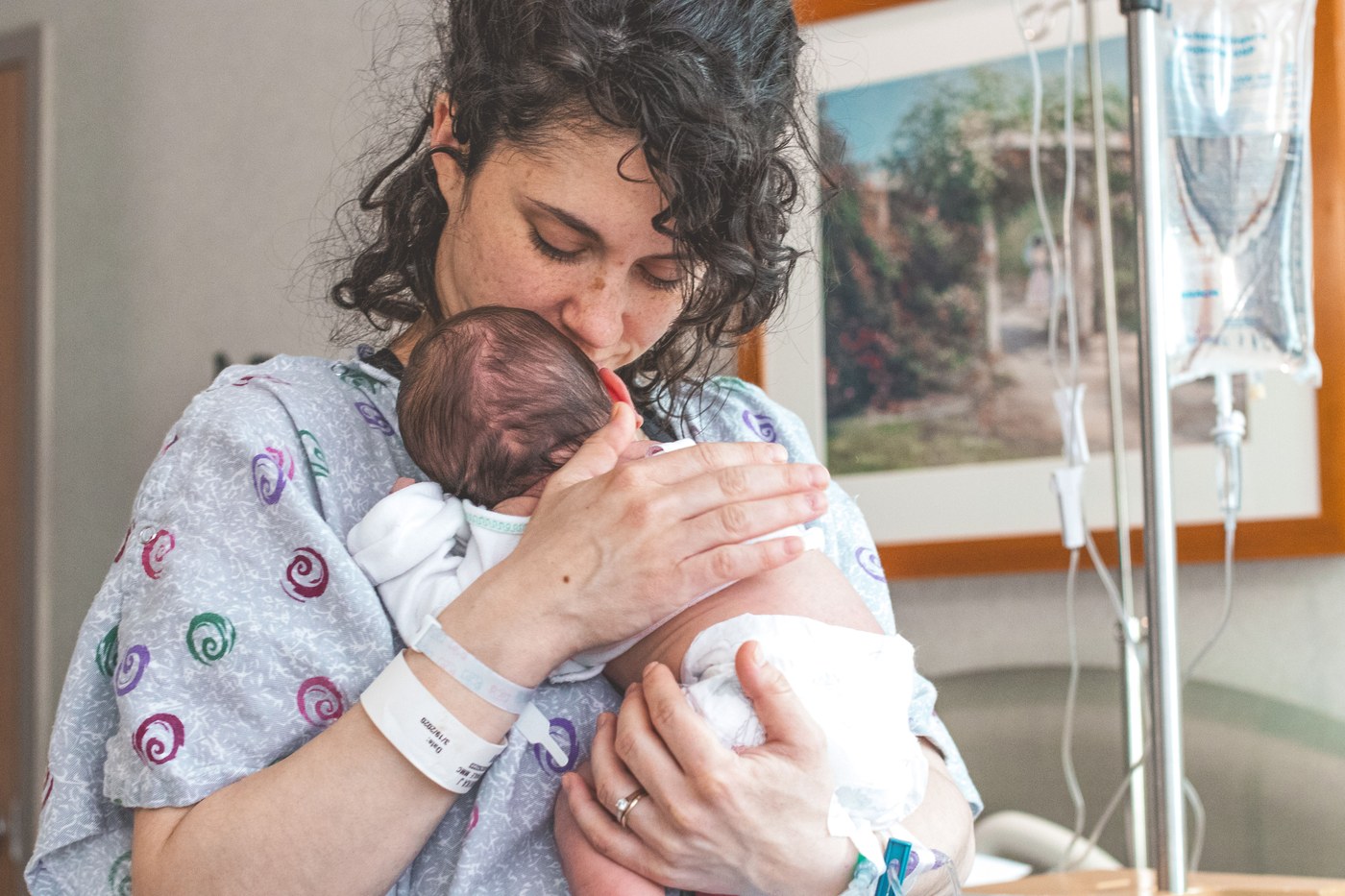
A postpartum identity crisis is the disorienting experience of no longer recognizing yourself after becoming a mother, a sense that the person you were has gone missing, replaced by someone whose priorities, emotions, and even personality feel unfamiliar. It is one of the most common experiences new mothers report and one of the least discussed in any practical, actionable way. This guide explains what's actually happening during a postpartum identity crisis, how it differs from clinical depression, and the specific strategies that help women move through it rather than simply wait for it to pass.
In this guide
What a Postpartum Identity Crisis Actually Feels Like
Women describe it in remarkably consistent terms across very different lives: looking in the mirror and feeling disconnected from the reflection, struggling to access interests or opinions that used to feel core to who they were, or feeling like they are performing a role rather than living a life. It often arrives quietly, building over the early postpartum months rather than appearing as a single dramatic moment, which makes it easy to dismiss in real time and only recognize clearly in retrospect.
This experience can coexist with genuine love for a new child, which is part of what makes it so confusing. A woman can feel completely devoted to her baby and simultaneously feel that some essential part of herself has gone missing, two things that seem contradictory but are, in fact, extremely common to experience at the same time.
Why It Happens
Several forces converge during this period. Hormonal shifts are dramatic and well documented, affecting mood, cognition, and even personality traits temporarily. Sleep deprivation independently impairs identity-related cognitive functions, the same parts of the brain involved in self-reflection and a stable sense of self are measurably affected by chronic sleep loss.
Beyond biology, the sheer scale of role change matters. Very few life transitions require someone to take on an entirely new, permanent identity category overnight while simultaneously losing access to most of the routines, environments, and social contexts that previously reinforced their sense of self. A new mother often loses her work identity temporarily, her body changes substantially, her social life narrows, and her daily structure is rebuilt entirely around someone else's needs, all within the same few months.
Researchers studying identity development describe this as a kind of forced identity foreclosure, where so many domains of the self are disrupted simultaneously that there is no stable footing left to stand on while the disruption happens. It is less like losing one thing and more like having the entire architecture rebuilt at once.
How It Differs From Postpartum Depression
A postpartum identity crisis and postpartum depression can occur together but are not the same experience, and treating one as the other can delay appropriate support. An identity crisis is primarily disorientation: confusion about who you are, grief for a former self, a sense of unfamiliarity. It does not necessarily involve the persistent low mood, loss of interest, or hopelessness that characterizes clinical depression.
That said, an unaddressed identity crisis can contribute to or worsen depressive symptoms over time, particularly if a woman feels isolated in the experience and unable to name what's happening. Any persistent sadness, anxiety, or intrusive thoughts should be evaluated by a healthcare provider regardless of whether the broader identity disorientation is also present, since postpartum mood disorders are treatable conditions that benefit from early intervention.
The Identity Categories Most Affected
Career identity is one of the most commonly disrupted categories, particularly for women who derived significant meaning and self-concept from professional accomplishment before having children. The sudden distance from that identity, even temporarily during leave, can feel destabilizing in ways that surprise women who didn't expect work to be so central to their sense of self until it was gone.
Physical identity shifts substantially too, a body that has changed in ways that may feel unfamiliar, alongside an energy level and physical capability that often doesn't match pre-pregnancy expectations for months or longer. Social identity changes as friendships shift, sometimes drifting from friends without children, and as a woman's primary social context narrows toward other parents or caregiving-focused interactions.
Relational identity, who you are within your partnership, your family of origin, and your friendships, also reorganizes, sometimes in ways that bring people closer and sometimes in ways that create new distance, as the practical realities of caregiving reshape how much time and energy is available for any given relationship.
Practical Strategies That Help
Naming the experience explicitly, even just internally, reduces its power to feel like a personal failing. Recognizing this is a postpartum identity crisis, a known and common experience, reframes a frightening feeling as something with a name, a cause, and, importantly, an end point, rather than a permanent new reality.
Deliberately preserving small, non-negotiable pieces of pre-motherhood identity, even in tiny amounts, helps maintain a throughline rather than a complete rupture. This might mean ten minutes of a former hobby, a single ongoing friendship maintained with intention, or simply continuing to follow an interest that has nothing to do with parenting, even when time for it feels nearly impossible to find.
Connecting with other mothers navigating the same disorientation provides a kind of validation that's hard to get anywhere else, specifically because they recognize the experience without needing it explained. And giving the process realistic time matters more than most advice acknowledges. Identity reintegration after a disruption this significant is generally measured in months and years, not weeks, and expecting a fast resolution often adds unnecessary pressure on top of an already difficult adjustment.
When to Seek Additional Support
While a postpartum identity crisis is a normal and common experience, certain signs suggest it's worth seeking professional support beyond self-directed coping strategies. If the disconnection from yourself is accompanied by persistent inability to feel pleasure in anything, including moments with your child, or if it's interfering significantly with your ability to function in daily responsibilities, these warrant a conversation with a healthcare provider.
It's also worth seeking support if the feeling of disconnection isn't gradually easing at all over several months, since some improvement, even if slow and uneven, is the typical pattern. A complete plateau with no movement in either direction is worth discussing with a professional, who can help distinguish between an extended but normal adjustment and something that would benefit from more structured treatment.
Perinatal mental health specialists are trained specifically in this transition and tend to offer more relevant support than generalist therapy, since they're already familiar with the framework of matrescence and identity disruption, rather than needing that context built from scratch in early sessions.
Key Takeaways
- A postpartum identity crisis is the common experience of feeling disconnected from your former self after becoming a mother, distinct from clinical depression.
- It stems from the convergence of hormonal change, sleep deprivation, and an unusually large, simultaneous disruption across nearly every domain of identity at once.
- Career, physical, social, and relational identity are the categories most commonly affected.
- Naming the experience explicitly and preserving small pieces of pre-motherhood identity both measurably help.
- Full identity reintegration typically takes months to years, not weeks, and expecting a faster timeline often adds unnecessary pressure.
A woman can feel completely devoted to her baby and simultaneously feel that some essential part of herself has gone missing, two things that seem contradictory but are extremely common to experience at the same time.
— Mothered, on record
Frequently Asked Questions
Is it normal to feel like I don't know who I am anymore after having a baby?
Yes, this is one of the most commonly reported experiences among new mothers, even though it's rarely discussed openly. It does not mean something is wrong with you or your adjustment to motherhood.
How long does a postpartum identity crisis usually last?
There's significant individual variation, but most women report gradual improvement over the first one to two years, with identity continuing to evolve and stabilize well beyond the initial postpartum period.
Should I see a therapist for this even if I don't think I have postpartum depression?
Many women find value in talking with a therapist familiar with perinatal and identity-related concerns specifically, even without a depression diagnosis, since the experience itself can be supported and worked through with professional guidance.
Can returning to work help resolve a postpartum identity crisis?
For some women, yes, reconnecting with a pre-motherhood identity domain like career can be stabilizing. For others, the return introduces new complexity rather than resolution. There's no single right answer, and it depends heavily on individual circumstances.
Does a postpartum identity crisis affect women differently depending on whether it is their first child?
Many women report a more intense identity disruption with a first child, since it marks the actual transition into the mother role itself, while subsequent children tend to bring their own adjustments layered onto an identity that already includes motherhood.
Can my partner do anything to help if I am going through this?
Partners can help significantly by actively asking about and engaging with the parts of you that exist outside the parenting role, rather than only discussing logistics and caregiving, which reinforces that those parts of your identity are still seen and valued.